YOUR CART
- No products in the cart.
Subtotal:
€ 0


photography and text:
Maxime Brygo
design:
Carel Fransen
supported by:
Centre National des Arts Plastiques
Région Hauts-de-France
Péi Brilé reconsiders the myths of Réunion Island through the figure of Robinson, a symbol of survival, humility and self-reliance. Through personal encounters on the island, Maxime Brygo (FR) reflects both on the island’s colonial history and on people currently living in the margins in the hard-to-reach mountains of the center and in the wild south.
Brygo examines what it means to inhabit a place. He focuses on people living outside mainstream society and their relationships, the landscapes, and lived histories. They inhabit ravines, highlands and forests. Their shelters are tents, huts, caves, or makeshift dwellings. They live with few resources and maintain a close relationship with nature.
The work connects these lives to earlier histories. It revisits pre-colonial visions of the island as an Eden. It also draws on the history of maroonage – a path to freedom for enslaved people by escaping into the highlands, together forming a hidden ‘interior kingdom’ that existed for nearly 185 years. However, the people photographed are not presented as modern maroons. They followed similar paths and inherited these landscapes.
Péi Brilé – Créole Réunionnais for Burnt Land, referring to the areas on Réunion affected by volcanic lava flows – is a layered and poetic story about the island. The book brings together a range of visual and textual materials. These include black-and-white images of mountains, portrayed as haunted by invisible presences. The book also includes colour landscapes, each framed to exclude any visible sky to reinforce the density of the jungle, and portraits of the island’s current inhabitants living in its recesses and hollows. The visuals are accompanied by a poetic text about Réunion, mixing eras and myths. The book also features historical texts on maroonage to provide context, and a fictional conversation between two inhabitants.
Maxime Brygo is a photographer who lives and works between Lille (France) and Brussels (Belgium). His work explores relationships between territories, architectures, landscapes, and ways of inhabiting, often focusing on marginal, transitional, or peripheral spaces. Through long-term projects, Brygo combines documentary approaches with fictional and narrative elements, questioning how histories, myths, and power structures are inscribed in places. Since 2009, his work has been widely exhibited in solo and group exhibitions in France and internationally, including at Les Chiroux in Liège, Contretype in Brussels, the Institut Français in Ho Chi Minh City, the Rencontres d’Arles, the Busan International Photography Festival, and numerous museums and cultural institutions across Europe, Asia, Africa, and the Americas. His projects Pavillons et totems, Flatland, Lignes de flottaison, and Éthers mark key stages of his artistic research. His work has been published in monographs, notably Flatland (Éditions Loco, 2023) and Lignes de flottaison (2021), and featured in major publications such as reGeneration2: Photographers of Tomorrow (Thames & Hudson / Aperture). He has received numerous awards and grants, including support from the CNAP, DRAC Hauts-de-France, the Région Hauts-de-France, and several photography prizes in France and Belgium. Brygo has taken part in many artist residencies, notably in Vietnam, La Réunion, Belgium, and France, and has been engaged in long-term collaborative research projects, including a duo residency with artist Ciel Grommen at the Stellantis factory in Valenciennes. Alongside his artistic practice, he is actively involved in education and transmission through teaching, workshops, and residencies linked to cultural and educational programs. His work has been the subject of critical texts and reviews in art and photography journals in France and abroad.
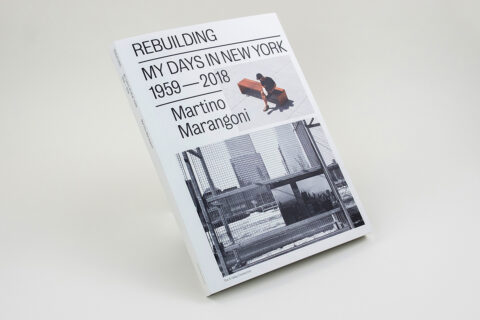
A selection of photographic work from a 60-year archive, documenting the changing city and street life in Lower Manhattan, New York.
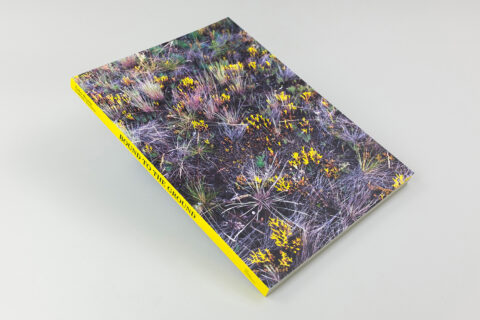
Firsthand stories of the people living and working in the Exclusion Zone around Chernobyl, 30 years after the nuclear accident.
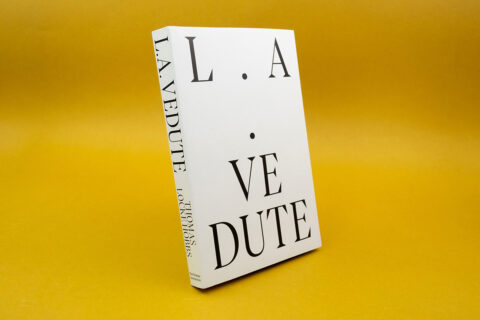
A documentary study of domestic architecture in Los Angeles that exposes the veins of a city, in conflict and coexistence, with a poetic obliviousness.